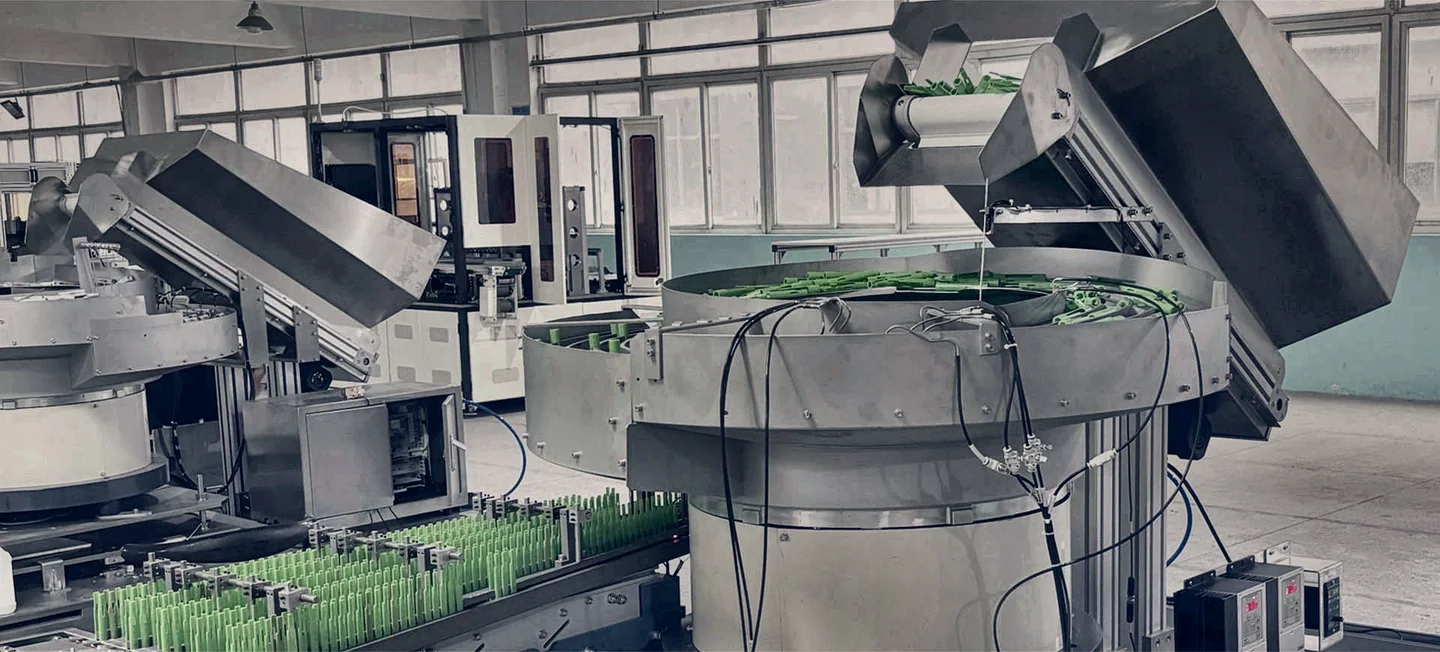
Start with the physical component.
Industry experience informs materials, guarding, cleanability and documentation, but the final feeder choice follows the part. Geometry, mass, finish, bulk behaviour, required orientation and the receiving machine are decisive.
Automotive components
Clips, connectors, seals, fasteners, inserts and mouldings.
View applicationElectronics components
Connectors, housings, contacts, terminals and small moulded parts.
View applicationMedical components
Small mouldings, closures and device parts with controlled handling.
View applicationPackaging components
Caps, pumps, fitments, scoops, inserts and closure components.
View applicationOther component families.
We also assess fasteners and fixings, appliance parts, consumer-product components, cosmetic closures, springs, washers, bearings, machined parts and other manufactured components. The initial evidence route is the same: show the part, define the accepted condition and explain the next process.
Application facts that change the solution.
- Does the part tangle, nest, overlap or attract static?
- Can it tolerate recirculation and part-on-part contact?
- Which feature creates a stable mechanical or visual datum?
- How many variants, suppliers, cavities or colours are expected?
- What must the receiving machine confirm before cycling?
- Which production conditions belong in the acceptance test?