UK support for component orientation, inspection & presentation projects

Components across manufacturing

Component orientation applications.

Explore typical parts and engineering risks, then send the real component range for an application-specific review.

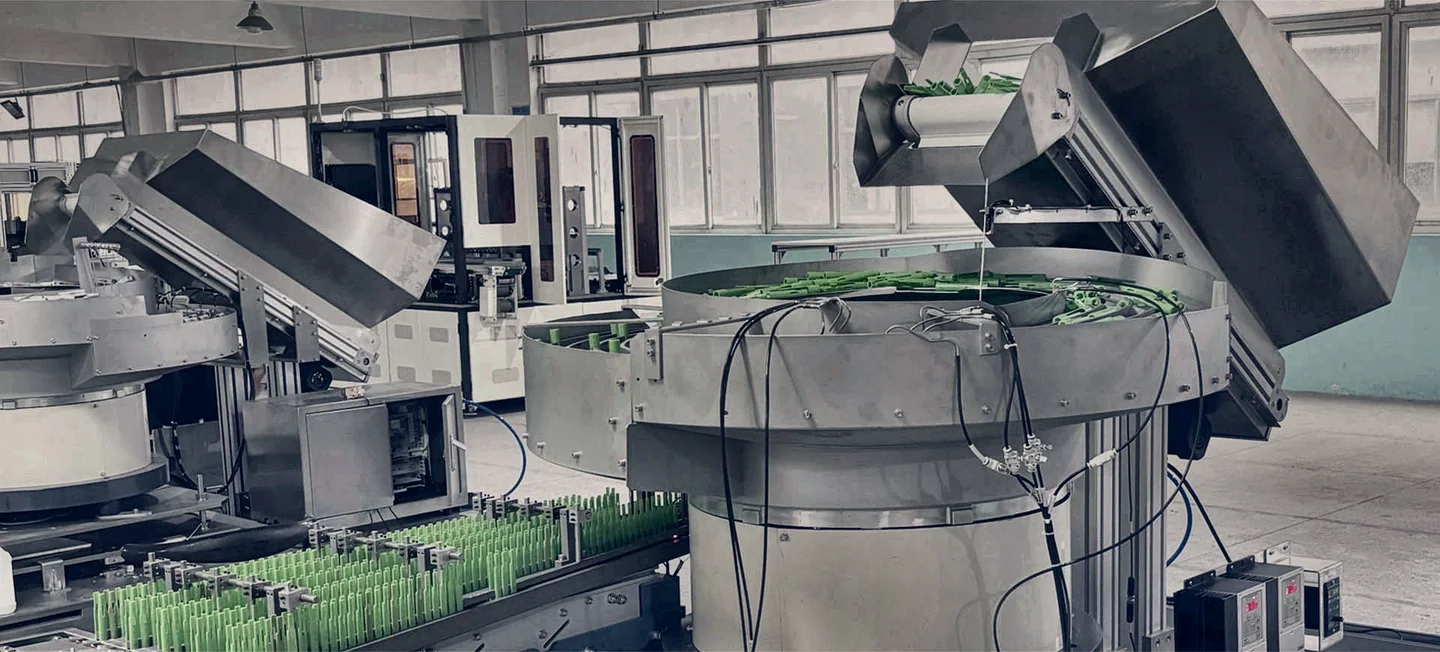
Bowl feeders and hopper elevators with green components on the feeding line.
Representative production technology. Final equipment is selected around the component, environment, output and downstream process.
Direct answer

Component orientation is used wherever loose parts must be separated, posed, verified and delivered consistently to an automated assembly, processing or packing operation.

Start with the physical component.

Industry experience informs materials, guarding, cleanability and documentation, but the final feeder choice follows the part. Geometry, mass, finish, bulk behaviour, required orientation and the receiving machine are decisive.

Automotive components

Clips, connectors, seals, fasteners, inserts and mouldings.

View application

Electronics components

Connectors, housings, contacts, terminals and small moulded parts.

View application

Medical components

Small mouldings, closures and device parts with controlled handling.

View application

Packaging components

Caps, pumps, fitments, scoops, inserts and closure components.

View application

Other component families.

We also assess fasteners and fixings, appliance parts, consumer-product components, cosmetic closures, springs, washers, bearings, machined parts and other manufactured components. The initial evidence route is the same: show the part, define the accepted condition and explain the next process.

Application facts that change the solution.

  • Does the part tangle, nest, overlap or attract static?
  • Can it tolerate recirculation and part-on-part contact?
  • Which feature creates a stable mechanical or visual datum?
  • How many variants, suppliers, cavities or colours are expected?
  • What must the receiving machine confirm before cycling?
  • Which production conditions belong in the acceptance test?

Practical answers

Common questions

Which industries use component orientation systems?

Automotive, electronics, medical, packaging, consumer goods, fastener, plastics and general manufacturing operations use component orientation wherever loose parts must enter an automated process consistently.

Does the industry determine the feeder type?

No. Industry standards and environment matter, but the component geometry, behaviour, required orientation, rate and machine interface usually determine the feeding principle.

Can one project cover several component families?

Yes, provided every component is reviewed. The result may use change parts, adjustable tooling, multiple feeder lanes or a flexible feeding cell.

Start with the component

Show us the part and the condition your machine needs.

Send photographs or drawings, representative variants, required orientation, target sustained rate and the downstream interface. We will identify the most suitable next engineering step.

Call 01844 617223Send component details