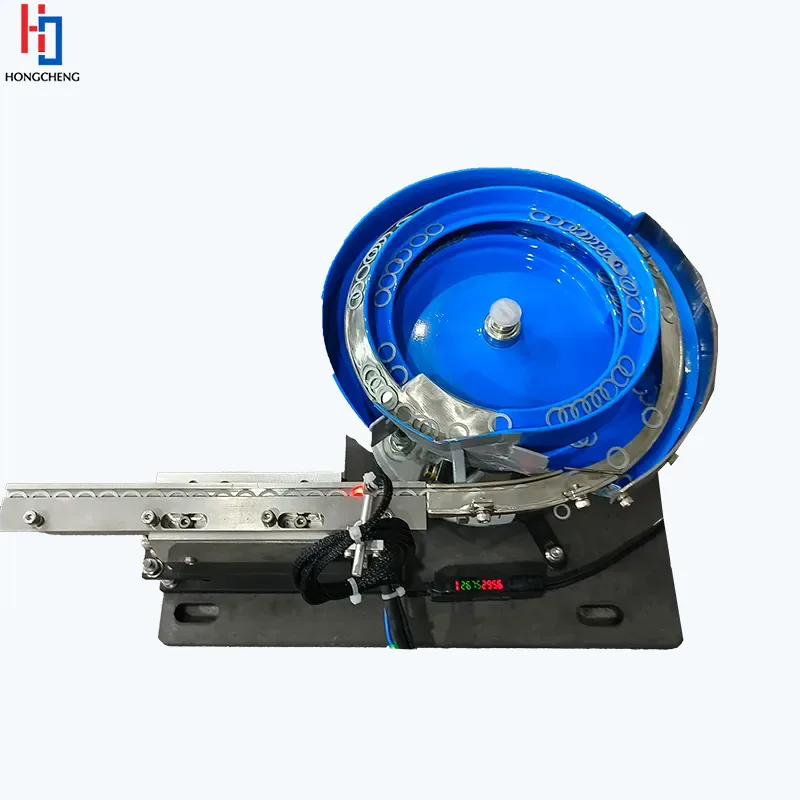
Why singulation comes before orientation
A camera cannot reliably classify a feature hidden by another part, and orientation tooling cannot control two components travelling as one. Singulation creates the physical separation needed for a repeatable decision and a stable hand-off.
The correct method depends on the failure mode. Nesting parts may need geometry that breaks the pair apart; tangled components may need controlled agitation and metering; flat overlapping parts may need a thin single-layer presentation; and a downstream sensor may need a defined gap rather than simple one-by-one flow.
Common singulation methods
- Metered hoppers and elevators that limit the bulk load entering the feeder
- Vibratory bowl or linear track geometry that creates a single-file path
- Step feeding that lifts a controlled layer from the bulk hopper
- Flexible feeder surfaces that redistribute parts for vision-guided picking
- Timing screws, belts or escapements that create repeatable pitch and release
- Reject and recirculation routes for doubles, overlaps or unpickable clusters
How should singulation performance be measured?
| Measure | What it shows | Useful acceptance question |
|---|---|---|
| Accepted item rate | Useful output at the defined point | How many separated parts are available per minute? |
| Double or overlap rate | Quality of separation | How are doubles detected and removed? |
| Gap or pitch stability | Suitability for sensing or transfer | What minimum spacing does the next process need? |
| Recovery behaviour | Robustness after a disturbance | Does the system restart without manual sorting? |
| Part condition | Effect of agitation and recirculation | Are marking, burr or contamination limits maintained? |
Combining singulation with inspection
Once parts are separated, a sensor or machine vision inspection system can check orientation, presence, variant and selected visible quality features. The reject method must preserve the accepted stream and provide the fault response required by the production risk.
From singulation to final release
A controlled single-file stream may still need accumulation and a timed escapement before assembly. The component presentation system owns the last datum, spacing, part-present confirmation and machine handshake.