The essential difference.
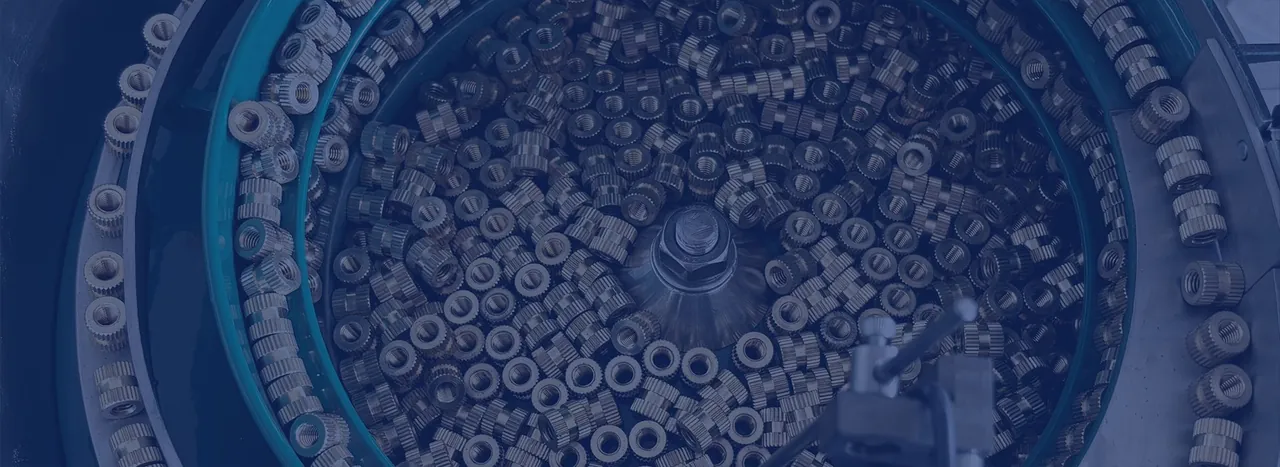
A vibratory bowl uses a dedicated track and tooling features to progressively reject or correct parts. A flexible feeder redistributes components on a surface, uses a camera to locate valid poses and asks a robot to pick and place them.
| Decision factor | Vibratory bowl feeder | Flexible feeder |
|---|---|---|
| Product variety | Strongest for a stable component; compatible variants may need change parts | Can support several compatible formats through recipes and gripper/tool changes |
| Orientation method | Dedicated mechanical, pneumatic, sensor or vision tooling around a track | Vision location plus robotic pick and placement |
| Output model | Continuous oriented stream and accumulated buffer | Discrete pick cycle with periodic redistribution |
| Part contact | Recirculation and part-on-part contact must be assessed | Can reduce track recirculation but plate movement and bulk loading still matter |
| Changeover | Tooling adjustment or physical change parts | Vision, motion, grip and placement recipes; mechanical fingers may still change |
| Integration | Linear track, escapement or direct machine feed | Robot placement into a nest, assembly or conveyor pocket |
Choose from sustained production evidence.
Compare accepted output across the whole cycle. For a bowl this includes recirculation, replenishment, track back-pressure and the final escapement. For flexible feeding it includes plate motion, settling, imaging, pickable yield, robot travel, failed picks and replenishment.
Hybrid options.
A bowl can use vision for a final orientation or variant check. A flexible feeder can place parts into a secondary inspection nest or buffer. The choice is not limited to two isolated catalogue products.
Trial the worst case.
Use every component variant, finish and supplier that affects behaviour. Include the lowest-contrast vision condition, most easily tangled part, normal bulk density and the downstream placement tolerance.