UK support for component orientation, inspection & presentation projects

Application engineering

Electronics component orientation.

Handle small connectors, housings, contacts and terminals with controlled tooling, accurate feature recognition and repeatable machine presentation.

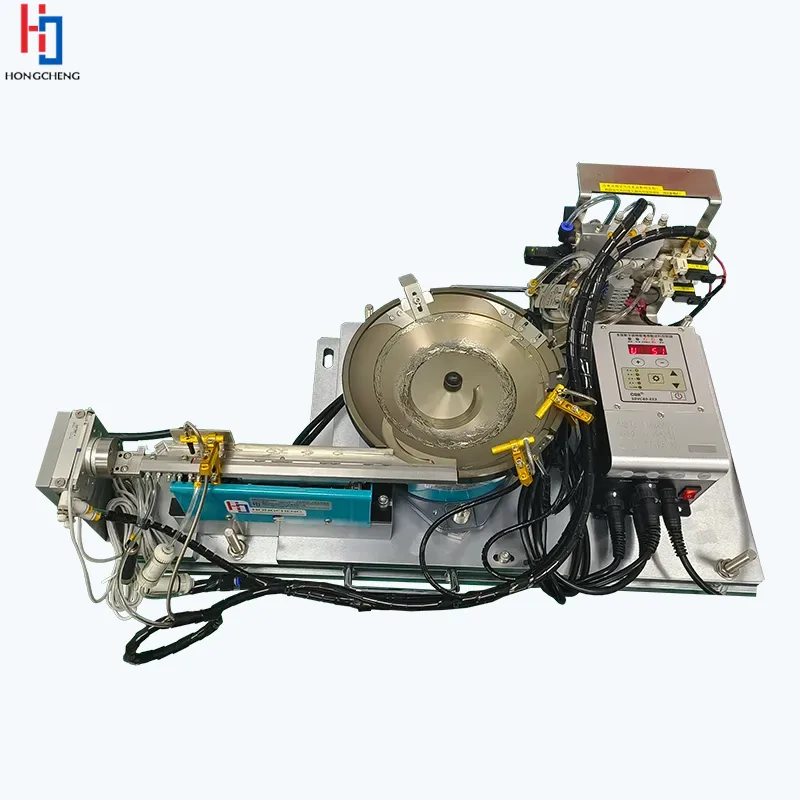
Metal bowl feeder with linear outfeed tooling, wiring and a control unit.
Small components often require controlled lighting, fine track geometry and positive sensing at the final machine hand-off.
Direct answer

Electronics component orientation systems separate delicate or similar-looking parts, use geometry or vision to confirm pose and variant, and present accepted components to insertion, assembly or packing equipment.

Precision without unnecessary recirculation.

Small mouldings, connectors, housings, terminals and contacts may be lightweight, static-sensitive, reflective or easily damaged. Bulk loading and recirculation should be controlled so the feeder does not create the very defects the inspection is intended to catch.

Features used for orientation.

Keys, pin cavities, locking latches, chamfers, colour, moulded marks and connector faces can establish pose or identity. Where the decisive feature is internal or too subtle for mechanical tooling, a camera can verify the final orientation.

Presentation to assembly.

The discharge may need a tight datum for insertion, a fixed nest for robot collection, a tube-transfer interface or controlled spacing on a conveyor. Sensors should detect the component reliably without being confused by colour or translucent material.

Format and recipe control.

Similar connectors can create expensive cross-contamination. Recipe selection, change-part confirmation, vision classification and line clearance procedures can be included where the application risk justifies them.

Practical answers

Common questions

Can very small electronic components be oriented automatically?

Often, but the practical method depends on geometry, mass, static, tolerances, required rate and the receiving process. Representative production samples are essential.

Can vision distinguish similar connector variants?

It can when a repeatable visible feature separates the variants under controlled lighting. The full variation range and potential look-alikes must be included in validation.

How are delicate contacts protected?

Options include controlled bulk loading, reduced drop heights, coatings, gentle feeding principles and minimised recirculation, all proven with the real parts.

Start with the component

Show us the part and the condition your machine needs.

Send photographs or drawings, representative variants, required orientation, target sustained rate and the downstream interface. We will identify the most suitable next engineering step.

Call 01844 617223Send component details