UK support for component orientation, inspection & presentation projects

Application engineering

Packaging component orientation.

Present caps, closures, pumps, fitments, scoops and inserts to filling, capping, assembly and packing equipment at the required rate and orientation.

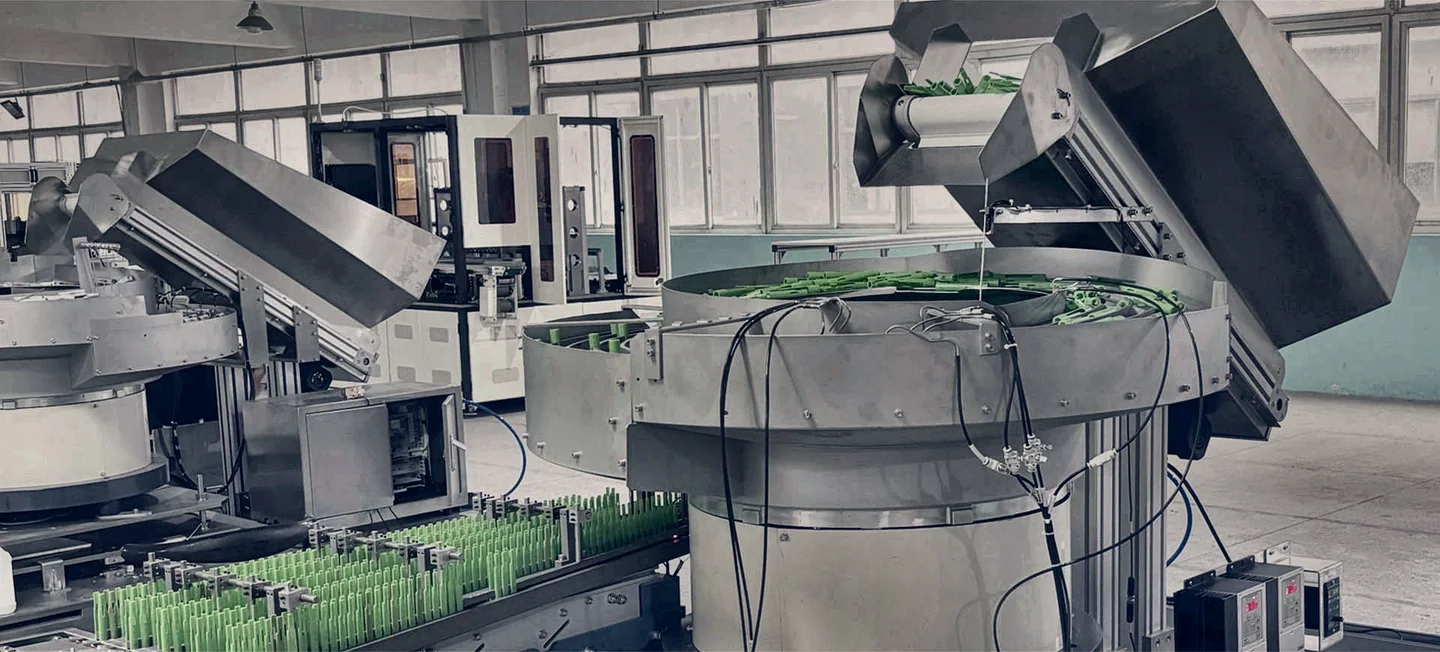
Bowl feeders and hopper elevators with green components on the feeding line.
The feeder is balanced with the packaging machine speed, buffer requirement, loading height and final transfer condition.
Direct answer

Packaging component orientation systems singulate loose caps, closures and inserts, establish their required direction and deliver a controlled supply to the packaging machine.

Components before the pack is complete.

Applications can include screw caps, snap caps, dispensing closures, pumps, triggers, fitments, scoops, spoons, desiccants and pack inserts. Each behaves differently in bulk and may require a dedicated transfer to the packaging machine.

Orientation features.

Skirts, threads, necks, dip tubes, spouts, hinges and asymmetric profiles can establish top/bottom or leading direction. Pumps and triggers can tangle, while cosmetic closures may require reduced recirculation and protected contact surfaces.

Line integration.

Buffer capacity should cover normal replenishment and short stops without excessive back-pressure. Low-level and high-level sensing can regulate the feeder and elevator, while the final chute or escapement responds to the packaging machine request.

Inspection before release.

Vision can confirm cap orientation, colour, variant, tamper feature, liner presence or other selected visible criteria. Inspection limits must be based on real samples and the normal production range.

Practical answers

Common questions

Can trigger sprays and pumps be oriented automatically?

Potentially, but dip tubes and trigger geometry can interlock. The bulk loading, separation and orientation method must be tested with representative production components.

Can caps be checked before entering a capper?

Yes. A sensor or camera can verify orientation, colour, variant, liner or selected visible features before the cap is released.

How much buffer is needed?

Buffer length depends on machine consumption, feeder output variation, replenishment, short stops and allowable back-pressure. It is sized as part of the line balance.

Start with the component

Show us the part and the condition your machine needs.

Send photographs or drawings, representative variants, required orientation, target sustained rate and the downstream interface. We will identify the most suitable next engineering step.

Call 01844 617223Send component details