Dedicated component orientation
Vibratory bowls, centrifugal feeders, step feeders and tailored tracks use repeatable part features to reject or correct incorrect attitudes.
Compare orientation methodsOrientation · inspection · presentation
Component orientation presents a part in the position and direction required by the next operation. Compare mechanical feeding and vision-guided presentation around your part’s geometry, acceptable orientation, singulation, inspection and receiving-machine hand-off—not the bulk feed rate alone.
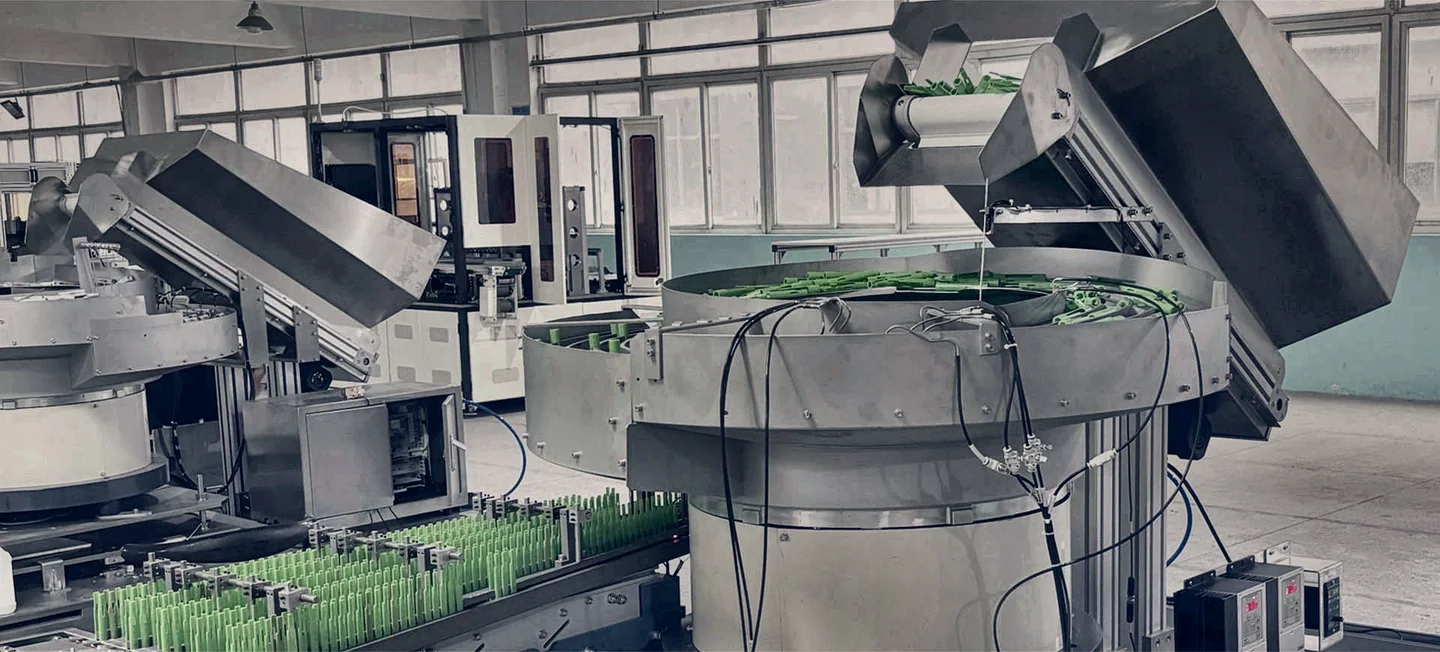
A complete system that separates, orients, inspects and presents your components in the exact condition required by the next machine.
A complete feed path
Reliable orientation is not just a feeder bowl. Bulk delivery, singulation, orientation, inspection and final release must stay balanced under normal production conditions.
Meter loose parts from a hopper, elevator or operator-loaded buffer.
Separate nested, overlapping or interlocked components into a controlled flow.
Use geometry, tooling, controlled motion or robot guidance to establish pose.
Verify direction, features, variant or selected visible quality criteria.
Buffer and release one accepted part to the agreed machine datum and signal.
System routes
The final solution may be mechanical, vision-guided or hybrid. Trials establish how the actual part behaves and which risks need to be engineered out.
Vibratory bowls, centrifugal feeders, step feeders and tailored tracks use repeatable part features to reject or correct incorrect attitudes.
Compare orientation methodsControlled lighting, cameras and reject logic confirm orientation, presence, geometry, colour, mark or selected visible defects.
Explore vision inspectionA presentation platform redistributes parts while vision finds pickable poses and a robot places accepted components into the process.
Understand flexible feedingLinear tracks, buffers, escapements, nests and sensors deliver one accepted component at the right position, spacing and time.
Plan the machine hand-offParts feeding methods
These focused routes explain the decisions buyers need to make before a trial, quotation or line-integration review.
Orient repeatable parts with a tooled bowl, controlled track and production-ready discharge.
Explore vibratory bowl feedersUnderstand track selectors, reject points, recirculation and the final hand-off.
Explore bowl feeder toolingAssess controlled elevation for suitable larger, heavier or surface-sensitive components.
Explore step feedersSeparate nested, overlapping or bulk-fed parts before orientation, inspection or packing.
Explore component singulation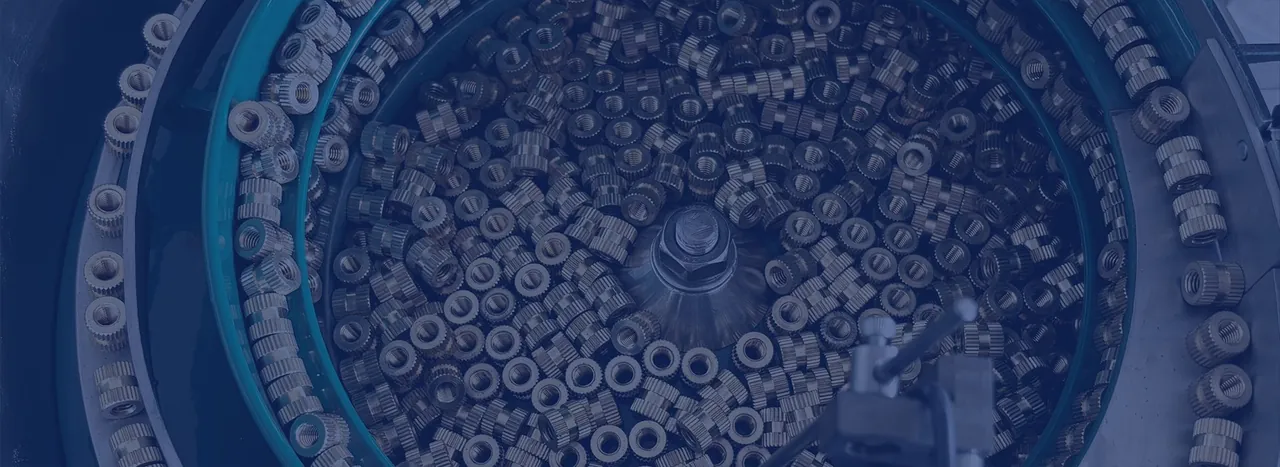
Engineered around the interface
The final datum, accumulated quantity, gap, release signal and recovery behaviour are established with the downstream cycle—not added after the feeder has been selected.
Component applications
Material, finish, geometry and bulk behaviour matter more than the industry label. These pages show the typical issues we assess.
Clips, connectors, seals, inserts, fasteners and mouldings with positive hand-off requirements.
View automotive applicationsConnectors, housings, contacts and delicate parts requiring controlled presentation and feature checks.
View electronics applicationsSmall mouldings, closures and devices where cleanability, contact control and traceable acceptance matter.
View medical applicationsCaps, pumps, closures, spoons, fitments and inserts presented before filling, capping or packing.
View packaging applicationsScrews, nuts, washers, rivets and inserts delivered head-first, shank-first or to a fixed datum.
Browse all applicationsCompatible product families considered for recipe-based tooling or vision-guided flexible feeding.
Explore flexible feedingProject route
Performance is established against representative components, agreed conditions and a measurable acceptance method.
Capture the part range, orientation, target rate, environment and receiving process.
Use representative samples to assess feeding behaviour, tooling, lighting and pickability.
Align mechanics, controls, guarding, buffering and fault recovery with the line.
Test sustained accepted output and presentation against the agreed production conditions.
Practical answers
Component orientation is the controlled process of taking loose or randomly arranged parts and presenting them in a defined position, direction and spacing for assembly, inspection, robotic picking or packing.
The choice depends on geometry, centre of gravity, friction, nesting, surface sensitivity, required orientation, sustainable rate, format range and the hand-off to the receiving machine. Representative parts are normally the safest basis for selection.
Yes. Mechanical tooling can establish a stable position and a camera or sensor can verify orientation, presence, variant or selected visible defects before the accepted part is released.
Potentially. Compatible variants may use adjustable tooling, change parts or vision-guided flexible feeding. Every variant should be included in the review and acceptance plan.
Define output as sustained accepted parts at the agreed discharge condition over a stated test period, including normal replenishment and clearly defined interventions.
Yes. The project scope can include mechanical interfaces, buffering, sensors, PLC or robot handshakes, guarding, reject confirmation and commissioning, subject to a controls and site review.
Start with the component
Send photographs or drawings, representative variants, required orientation, target sustained rate and the downstream interface. We will identify the most suitable next engineering step.
A wrong pose is different from a defective component. An orientation system may re-present an acceptable part whose required face is hidden, while a confirmed damaged or wrong-variant part needs a separate disposition. Define these decisions before combining vision with the feeder. The inspection guide explains a pose-and-variant challenge matrix and how to prove that each result reaches the correct physical part at the final hand-off.
A component inspection may perform well on a prepared sample set and behave differently after a material change, cleaning or adjustment. Define which production changes should trigger a check of the established inspection.
Review component orientation and inspection — read the detailed guide