Translate a visual judgement into a measurable task.
A request to “check the component” is not yet a vision specification. Each criterion must be visible, repeatable and linked to representative samples. The feature size, contrast, location, motion and normal product variation determine the camera, lens, lighting and presentation method.
Pose & direction
Top/bottom, leading feature, rotational position or correct face.
Presence & completeness
Holes, inserts, clips, seals, moulded details or fitted components.
Variant & identity
Geometry, colour, mark, code or visible dimensional features.
Lighting is part of the inspection.
The same feature can appear differently as material, finish or orientation changes. Backlighting can create a clear silhouette, diffuse lighting can reduce glare on mouldings, polarisation may control reflections, and directional light can reveal surface or height detail. Lighting trials should use the actual component range.
Presentation controls false decisions.
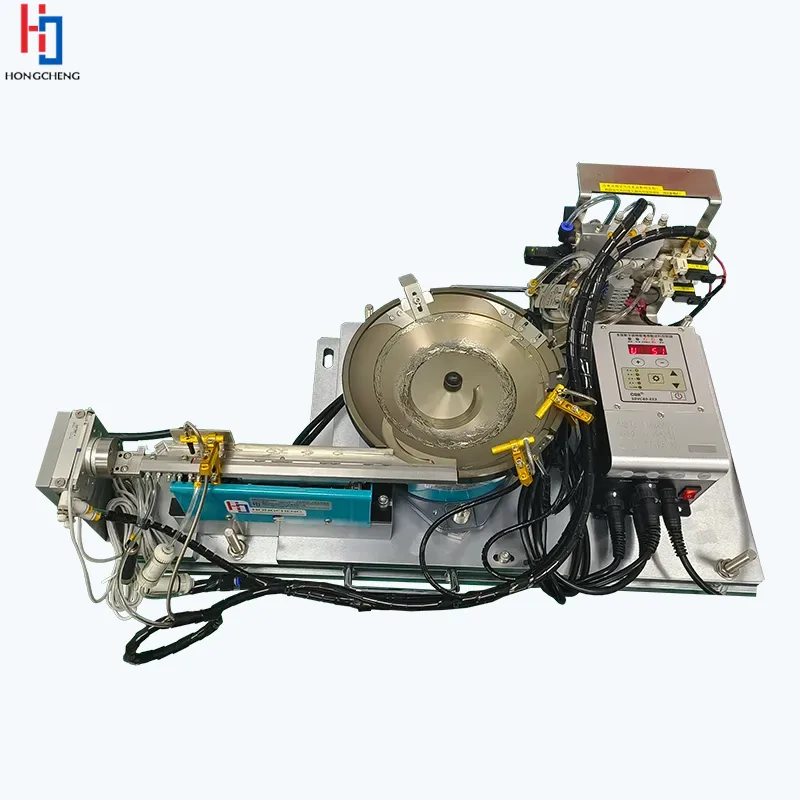
A stable view reduces variation that the image tools must tolerate. Components may be inspected on a linear track, in a nest, across a conveyor, on a flexible feeder plate or through several controlled views. If a critical feature is hidden in the first pose, a reorientation or second camera may be needed.
Reject handling must close the loop.
Options include air rejection, gates, diverters, robot removal, controlled recirculation or line stop. Where containment matters, a reject command can be paired with confirmation sensing and a secure reject bin. The system should define what happens after a missed trigger, failed reject or full bin.
| Requirement | Evidence needed | Typical output |
|---|---|---|
| Orientation verification | Correct and incorrect samples in all normal positions | Pass, recirculate or reject |
| Presence check | Complete and known incomplete assemblies | Pass, reject or line stop |
| Variant classification | Full format matrix and boundary samples | Route, count or recipe check |
| Visible defect detection | Defined defect library and acceptance limits | Reject, grade or image record |
Validation and image records.
Acceptance can use challenge samples, repeated presentations, worst-case colours and finishes, and an agreed false-accept/false-reject method. Systems may store reject images, statistical samples or every image where the controls, network and retention scope require it.